Equipment Reviews
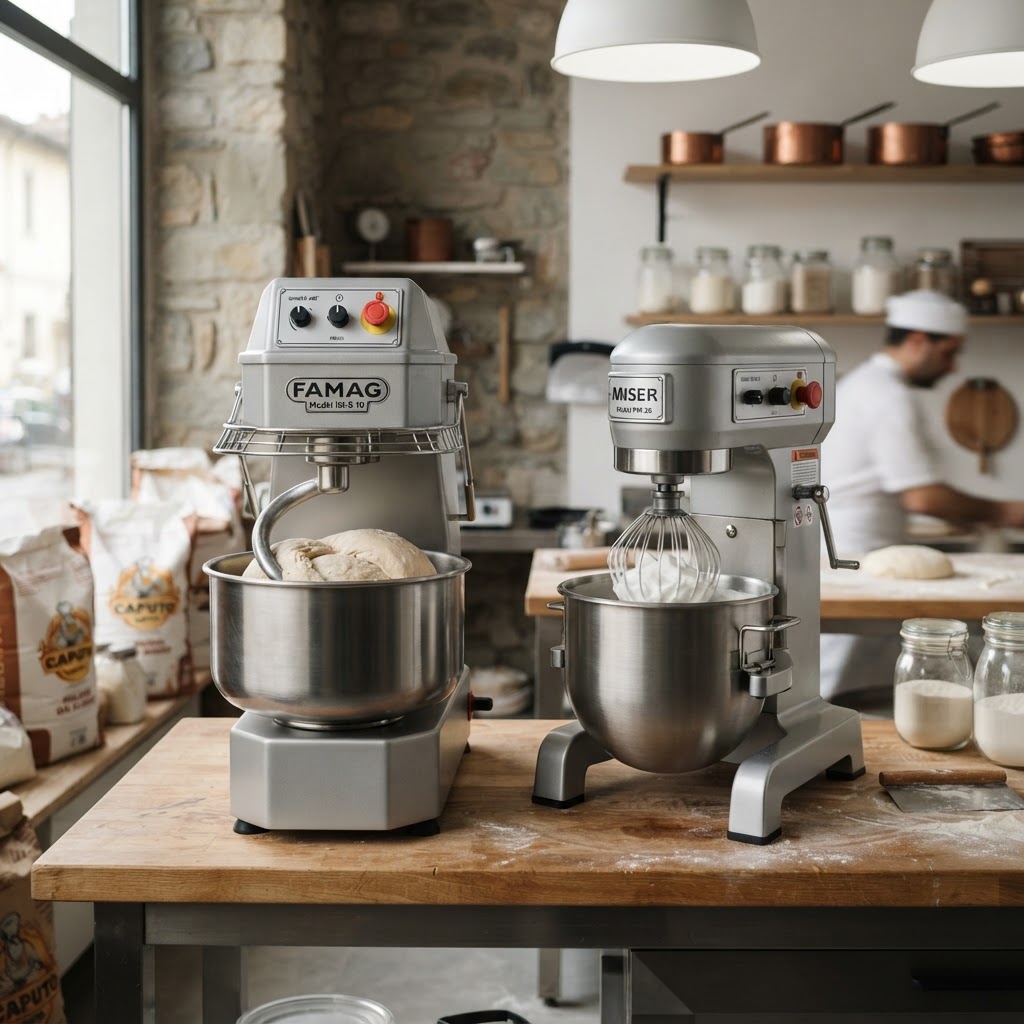
Spiral vs. Planetary Mixers: Italian Engineering for Different Baking Needs
Spiral vs. Planetary Mixers: Italian Engineering for Different Baking Needs
Quick Answer
Choose a spiral mixer if your bakery focuses on high-volume bread, pizza, or artisan doughs, as they provide superior gluten development with less heat friction. Opt for a planetary mixer if you require a versatile machine capable of whipping creams, mixing batters, and handling smaller, varied dough batches [4, 6, 8, 10].
The Heart of the Bakery: Understanding the Mechanics
In the world of professional baking, the mixer is the engine room of your kitchen. Italian engineering has long set the gold standard for these machines, emphasizing durability, precision, and efficiency. Understanding the fundamental difference between spiral and planetary designs is the first step toward optimizing your production [3, 7].
The Planetary Mixer: The Versatile Workhorse
Named for the way the attachment rotates around its own axis while orbiting the center of the bowl—much like planets around the sun—the planetary mixer is the ultimate multi-tasker [8, 9].
- Versatility: With interchangeable attachments like whisks, paddles, and dough hooks, these machines can handle everything from delicate meringues to heavy cookie doughs [4, 9].
- Design: The bowl remains stationary while the attachment does the work [6, 8].
- Best For: General-purpose kitchens, pastry shops, and bakeries that produce a wide variety of items beyond just bread [2, 4, 8].
The Spiral Mixer: The Dough Specialist
If your bakery is defined by the smell of fresh sourdough or crusty baguettes, the spiral mixer is your best friend. These machines are engineered specifically for the rigors of yeast-based doughs [5, 6].
- Mixing Action: Both the bowl and the spiral-shaped hook rotate simultaneously [6, 8]. This action pulls the dough into the hook, kneading it efficiently without overworking it [7, 10].
- Temperature Control: Because the dough stays in constant contact with the bowl and the mixing action is more efficient, spiral mixers generate less friction heat, which is critical for maintaining yeast activity and dough quality [2, 6, 8].
- Best For: Pizzerias, artisan bread bakeries, and high-volume production [5, 6, 10].
Comparison Table: At a Glance
| Feature | Spiral Mixer | Planetary Mixer | | :--- | :--- | :--- | | Primary Use | Bread, Pizza, Bagels | Cakes, Creams, Batters, Dough | | Mixing Action | Rotating bowl & spiral hook | Stationary bowl & rotating attachment | | Dough Quality | Excellent gluten development | Good for general mixing | | Heat Generation | Low | Higher | | Versatility | Low (Specialized) | High (Multi-purpose) |
Market Pricing and Investment
Investing in commercial-grade equipment is a significant decision. Prices vary based on capacity, brand, and features like removable bowls or programmable timers [3, 5].
- Planetary Mixers: Generally range from $800 for compact countertop models to over $6,000 for high-capacity floor units [5].
- Spiral Mixers: These are specialized industrial tools, typically starting around $2,000 and scaling up to $15,000+ for large-scale, high-capacity production units [5].
Frequently Asked Questions
1. Can I use a planetary mixer for bread dough? Yes, but with limitations. Planetary mixers can handle bread dough, but they are less efficient than spiral mixers and can struggle with very dense or large batches, often generating more heat which can affect the dough [6, 10].
2. Why is a spiral mixer better for artisan bread? Spiral mixers provide superior gluten development and better temperature control. The gentle, consistent kneading action ensures the dough is perfectly hydrated and structured without being "shattered" by high-speed attachments [6, 7, 8].
3. Do I need a removable bowl? For high-volume operations, a removable bowl is a game-changer. It allows you to move dough batches easily to a proofing area while the mixer starts on the next batch, significantly increasing your workflow efficiency [9].
Final Verdict: Which One Should You Buy?
Your choice should be dictated by your menu. If your business model relies on a diverse product line—cakes, frostings, cookies, and occasional bread—the planetary mixer is the most cost-effective and versatile choice [4, 8].
However, if your bakery is centered on high-volume bread or pizza production, the spiral mixer is an essential investment. The efficiency, energy savings, and superior dough quality it provides will pay dividends in consistency and production speed, making it the hallmark of a truly professional artisan bakery [6, 10].